➡️ INTRODUCTION
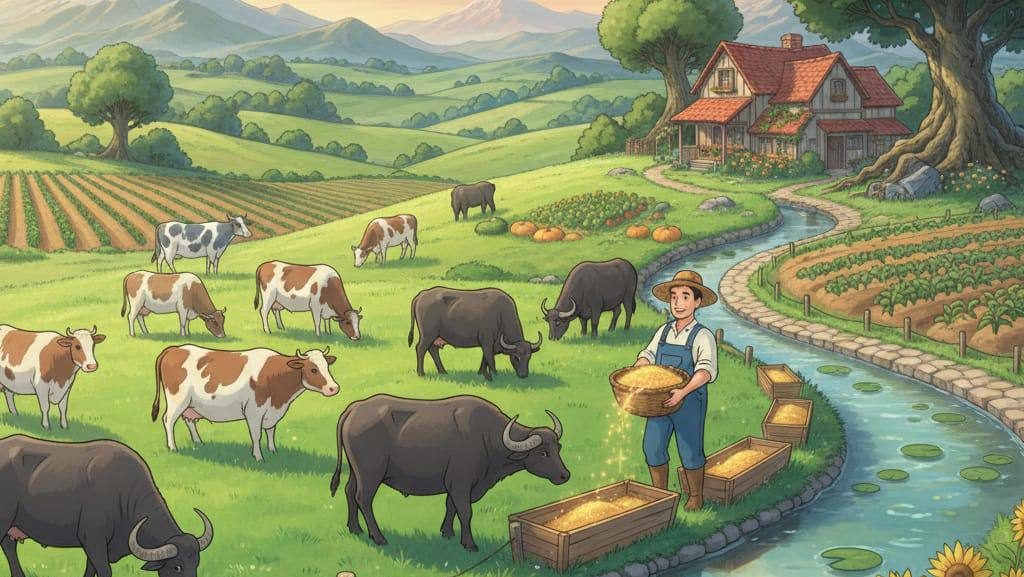
→ Providing a balanced diet for cattle and buffalo is essential for maintaining their health, improving milk production, and ensuring steady growth. Proper nutrition directly impacts productivity, fertility, immunity, and longevity of livestock. Small and large farmers alike benefit from understanding the nutritional requirements of their animals to optimize feeding strategies. By implementing well-planned diet plans, farmers can reduce feed costs, prevent deficiencies, and avoid common metabolic disorders. Balanced diets also enhance the quality of milk and meat, ensuring better market value. Learning to combine forages, concentrates, minerals, and vitamins effectively allows livestock owners to achieve consistent production, healthier animals, and greater farm profitability.
➡️ Key Points / Benefits
→ Enhances milk yield and quality in both cattle and buffalo.
→ Promotes healthy growth and body weight gain.
→ Reduces risk of diseases related to malnutrition or mineral deficiencies.
→ Optimizes feed utilization and reduces wastage.
→ Improves reproductive performance and fertility rates.
→ Supports sustainable livestock management and farm profitability.
🔵 1️⃣ → Understanding Nutritional Requirements
A balanced diet begins with understanding the nutritional needs of cattle and buffalo:
- Energy: Required for daily activities, milk production, and growth. Sources include grains, silage, and green fodder.
- Protein: Essential for tissue development, milk synthesis, and reproduction. Legume hays, oil cakes, and pulses are good sources.
- Minerals & Vitamins: Calcium, phosphorus, magnesium, and trace elements are crucial for bone development, milk quality, and immunity.
- Water: Fresh, clean water should be available at all times as it affects digestion, milk production, and overall health.
Step-by-step: Assess the weight, age, lactation stage, and work level of the animal to adjust nutrient intake accurately. Properly meeting nutritional needs ensures optimal productivity and reduces health problems.
🔵 2️⃣ → Forage-Based Feeding Strategies
Forages form the foundation of cattle and buffalo diets:
- Include green fodder like grass, legumes, and sorghum daily to provide fiber and essential nutrients.
- Use dry fodder like hay, straw, or maize stalks during lean periods.
- Rotate fodder sources to maintain variety and prevent deficiencies.
Tips: - Chop or crush coarse fodder to improve digestibility.
- Mix legume and grass fodder to enhance protein intake.
- Ensure proper storage to prevent mold growth and nutrient loss.
Forage-based feeding improves digestion, milk yield, and overall health while reducing dependence on costly concentrates.
🔵 3️⃣ → Concentrates and Energy Supplements
Concentrates provide additional energy and protein required for high-producing or lactating animals:
- Include grains like maize, barley, and wheat for energy.
- Add oil cakes or soybean meal to supply protein.
- Use commercial feed mixes for convenience and balanced nutrient supply.
Practical tips: - Introduce concentrates gradually to prevent digestive issues.
- Adjust quantity based on milk yield and body condition.
- Avoid overfeeding to prevent obesity or metabolic disorders.
Concentrates are especially important for lactating cows and buffaloes to maintain milk quality and quantity.
🔵 4️⃣ → Mineral and Vitamin Supplementation
Minerals and vitamins are critical for immunity, reproduction, and milk quality:
- Calcium & Phosphorus: Required for strong bones, teeth, and milk production. Sources: mineral licks, limestone powder, or bone meal.
- Trace Minerals: Zinc, copper, selenium, and iodine support growth, fertility, and disease resistance.
- Vitamins: Vitamins A, D, and E are important for vision, bone health, and antioxidant protection.
Tips for supplementation: - Provide free-choice mineral blocks to ensure animals meet their daily needs.
- Avoid over-supplementation, which may cause toxicity.
- Regularly consult a veterinarian to adjust supplements according to animal needs.
Proper supplementation prevents deficiencies, reproductive problems, and enhances milk composition.
🔵 5️⃣ → Designing a Daily Feeding Schedule
A structured feeding schedule ensures consistent nutrition and productivity:
- Morning: Offer green fodder and water before milking.
- Midday: Provide dry fodder or silage with small portions of concentrates.
- Evening: Feed fresh green fodder and supplements after milking.
- Night: Ensure animals have access to clean water and resting area.
Dos & Don’ts: - Do feed according to body weight, lactation stage, and age.
- Don’t abruptly change feed, as this can disturb digestion.
- Monitor body condition and adjust ration quantities accordingly.
A well-planned daily routine improves feed efficiency, milk yield, and overall health of cattle and buffalo.
➡️ CONCLUSION
→ Balanced diet plans for cattle and buffalo are crucial for improving productivity, health, and farm profitability. By understanding nutritional requirements, providing quality forages, using concentrates wisely, supplementing minerals and vitamins, and maintaining a structured feeding schedule, farmers can ensure optimum growth, high milk yield, and reproductive efficiency. Consistent attention to feeding practices reduces the risk of deficiencies, metabolic disorders, and other health issues. Implementing these strategies allows small and large farmers alike to maximize their livestock’s potential, maintain healthy herds, and achieve sustainable farm management. Proper nutrition is the foundation of productive, healthy, and profitable livestock farming.